

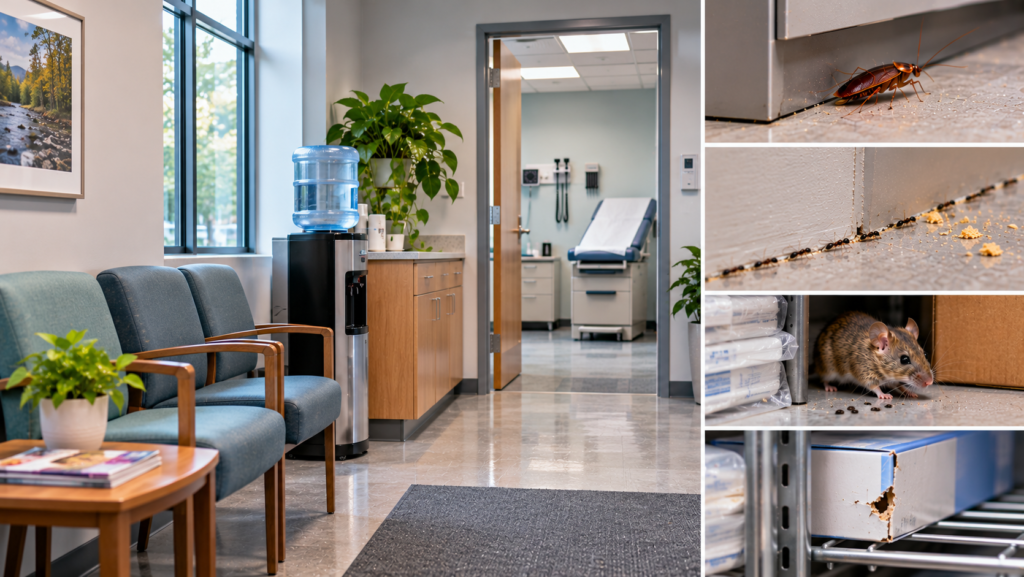
A patient notices a cockroach near the waiting-room water dispenser. The insect disappears beneath a cabinet, but the front desk now has an uncomfortable question to answer. Medical offices depend on clean, orderly spaces, and pest concerns can disrupt that confidence quickly. We help Greenville-area businesses investigate what a sighting actually means, rather than treating every insect as proof of a widespread infestation. For healthcare settings, the best response also respects patient schedules, stored supplies, and the routines staff must keep running.
Look Beyond the Exam Room for Early Warning Signs
An examination room might receive careful cleaning while pests remain active in less visible parts of the building. Break rooms provide food scraps; plumbing spaces offer moisture; deliveries introduce packaging and occasional hitchhiking insects. Rodents and cockroaches can contaminate surfaces, but their presence must be confirmed through evidence, not assumptions about a single mark or sound.
We encourage staff to report specific observations from accessible areas:
- Waiting areas: Record insects seen near seating, vending machines, or water stations without disturbing patients.
- Supply closets: Flag damaged cartons or suspicious droppings before potentially affected materials are distributed.
- Staff kitchens: Note recurring ants or roaches near appliances, sinks, and food-storage shelves.
- Restrooms: Report plumbing leaks and insects emerging repeatedly near cabinets or wall penetrations.
- Exterior entrances: Watch for gaps around doors and signs of rodents near waste containers or landscaping.
A useful incident report includes the date, room, and photograph when available. Staff should follow the facility’s infection-prevention procedures when contamination is suspected. Our article on regular commercial inspections discusses why scheduled checks can identify developing risks before they interrupt business. The point is not to make clinical employees into pest technicians. It is to give our team accurate observations to investigate.
Build Prevention Around the Office’s Daily Movement
A medical suite changes throughout the day. Patients arrive, deliveries are signed for, trash moves out, and cleaners work after closing. Each routine can expose an opening or create a sheltered spot. Greenville’s humidity adds another reason to pay attention to plumbing and drainage, although moisture alone does not establish that pests are present.
Small operational adjustments can make the premises easier to protect:
- Receiving: Examine damaged shipments before moving cartons into clean storage areas.
- Storage: Leave inspection access near walls rather than crowding every shelf with supplies.
- Waste: Keep receptacles covered and arrange prompt removal of food-related trash.
- Repairs: Ask facilities staff to address leaking fixtures and damaged door sweeps.
- Communication: Identify one office contact to share sightings, access restrictions, and maintenance updates.
These responsibilities cross departments. Reception may notice a problem first, but a property manager might control the door repair, while a cleaning contractor handles residue beneath break-room appliances. We help connect those details during inspection. Our recommendations may include exclusion and sanitation changes alongside treatment, depending on the pest and conditions found.
It also matters where an opening leads. Sealing an unfamiliar gap without checking for active rodents can complicate removal. Likewise, applying an insect spray in a cabinet holding medical supplies may be inappropriate. Proper methods begin with identification, assessment of the room’s use, and attention to label directions and facility policies.
Coordinate Treatment Without Disrupting Patient Care
Medical offices cannot always close a wing or move equipment at short notice. Appointment books, privacy requirements, and specialized rooms shape when technicians can enter. A commercial pest plan should acknowledge those realities before products or monitoring devices are placed. Our initial inspection includes discussing the industry’s operating requirements, identifying entry points and harborage, and developing a customized response.
An organized arrangement should address five questions:
- Access: Which rooms can be inspected safely, and who must authorize entry to restricted spaces?
- Identification: What evidence confirms the pest, and which areas require closer examination?
- Method: Can monitoring, repairs, or targeted treatment address the problem without unnecessary applications?
- Scheduling: When can work occur with minimal interruption to appointments and cleaning routines?
- Follow-up: How will staff document new evidence and confirm whether activity is declining?
Our guide to choosing a pest plan explains why service should match the property’s risks rather than follow a generic schedule. We customize commercial treatments and follow-up for individual businesses. That does not mean every medical room receives the same treatment or that pest service replaces clinical infection control. Facility personnel retain responsibility for patient-care precautions, while we address pest activity and the conditions contributing to it.
Good records make the process easier to evaluate. A quiet week is encouraging, but documented inspections, completed repairs, and repeated monitoring offer stronger evidence that a recurring problem is being addressed.
Keep Pest Concerns Out of the Appointment Schedule
A medical office should be remembered for attentive care, not an insect sighting. If your facility has reported pest activity or needs preventive planning, Greenville Pest Control can inspect accessible areas and develop commercial service around your building’s routines. Contact us to discuss the evidence, scheduling needs, and practical next steps.
