

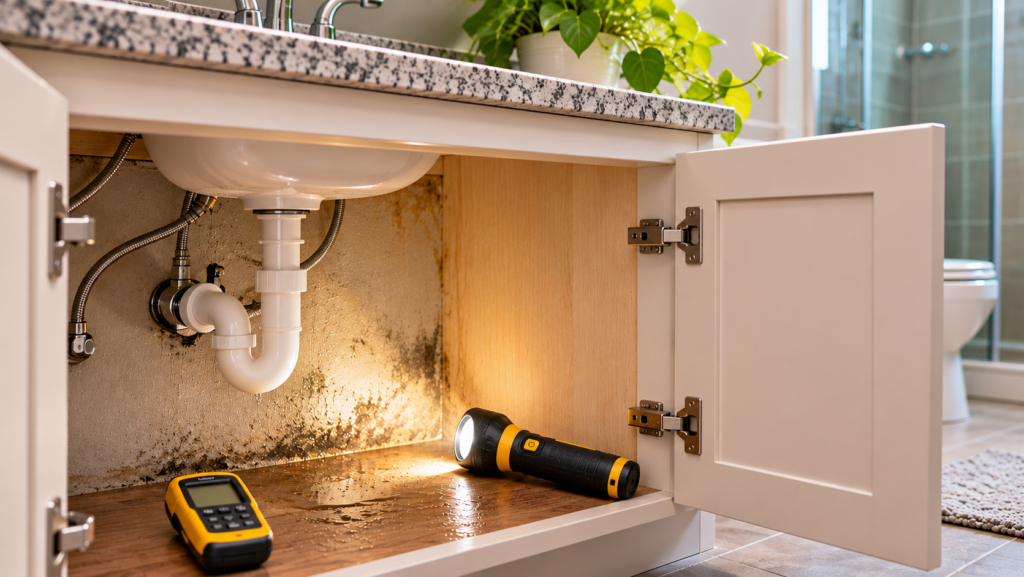
The bathroom looks clean, but cockroaches keep appearing near the vanity. A basement corner smells musty even though the floor seems dry. Problems like these often begin somewhere less visible than the place where pests are first noticed. A slow leak or poorly ventilated cavity may be helping insects survive while the underlying moisture goes unrecognized.
Professional pest inspections consider the building conditions surrounding an infestation, not just the insects themselves. In Greenville, where humid weather and rainfall affect homes throughout the year, damp areas need attention. Our technicians look for accessible moisture clues, compare them with pest evidence, and identify when a separate repair specialist should become involved.
Inspect the Spaces Where Water Can Collect Quietly
Water can accumulate behind fixtures and beneath buildings without creating an obvious puddle in a living area. Kitchens, bathrooms, basements, and crawl spaces each have different sources of moisture. An inspection helps narrow the search by connecting unusual pest patterns to the spaces they use.
We may evaluate locations such as:
- Sink cabinets: Slow drips and damp cabinet materials may support cockroaches or other moisture-associated insects.
- Crawl spaces: Wet soil, inadequate drainage, and condensation can create persistently humid conditions.
- Laundry connections: Hoses, drains, and appliance recesses may hide small leaks between routine cleaning sessions.
- Foundation edges: Pooling rainwater and poor grading can keep soil damp beside structural wood.
- Bathroom transitions: Failed seals around plumbing or fixtures can permit moisture into adjoining cavities.
A musty odor is not proof of infestation. Likewise, finding an insect near a sink does not establish that a pipe is leaking. Our technicians look for supporting evidence and explain what is visible, what remains uncertain, and which areas deserve closer examination.
Our article on moisture and pest prevention describes why correcting damp conditions can support effective pest management. Moisture removal helps change the environment, but it does not automatically eliminate a colony that is already established.
Connect Pest Evidence With Moisture Conditions
Different pests use water and shelter in different ways. Subterranean termites require moisture and may travel through soil-connected pathways toward wood. Cockroaches often gather near plumbing and concealed harborages. Ant activity can also increase where water and accessible food are available. A useful inspection identifies the pest before attributing its presence to a particular condition.
Clues we assess can include:
- Repeated sightings: Insects appearing near the same fixture may suggest an ongoing harborage or resource.
- Mud tubes: Earthen termite passages near damp foundations can indicate protected soil-to-wood movement.
- Droppings and debris: Evidence beneath appliances or inside cabinets can reveal recurring pest activity.
- Wood changes: Softening, discoloration, or surface distortion may warrant termite or repair evaluation.
- Seasonal changes: Increased rainfall or shifting indoor humidity may alter where pests become noticeable.
Moisture and pests can occur together without one proving the other caused the problem. A damp window frame might have a weatherproofing issue rather than termite damage. In another home, accessible mud tubes and affected wood may justify a termite-focused inspection. The right conclusion depends on the combined findings.
Our guide to early inspection signs explains why technicians compare pest clues, entry openings, and damp areas instead of treating a single sighting as the whole story. The same inspection logic applies outside fall, especially in homes with recurring basement or plumbing moisture.
Turn Inspection Findings Into a Coordinated Plan
Pest technicians can identify visible dampness and conditions that favor insects, but pest control is not the same as a comprehensive plumbing, waterproofing, mold, or structural assessment. We explain that distinction so homeowners know which recommendations belong to treatment and which require another qualified professional.
An inspection-based plan may address:
- Identification: We confirm the relevant pest before selecting control measures or monitoring locations.
- Activity records: Findings establish where live pests, droppings, or other current signs were observed.
- Maintenance referrals: Leaks, drainage defects, or damaged materials may need specialist evaluation.
- Focused treatment: Confirmed pest activity is addressed with methods suited to the species and property.
- Follow-up checks: Later visits compare pest activity and review whether identified conditions have changed.
We may recommend correcting a drain leak while targeting cockroaches around accessible harborages. For termites, the strategy may involve a dedicated assessment and appropriate baiting or liquid treatment. Neither type of service substitutes for repairing damaged materials or eliminating the source of unwanted water.
That coordinated approach also prevents unnecessary pesticide applications when no active infestation has been confirmed. Sometimes the most important inspection finding is a damp area that needs maintenance and monitoring. Other times, fresh pest evidence warrants treatment alongside repairs.
Greenville homeowners benefit from understanding both parts of the problem. Addressing moisture can make a property less favorable to certain pests, while documented inspection findings help determine whether professional control is needed now or later. Because hidden cavities cannot always be evaluated without opening materials, we also explain the limits of what was inspected.
Look Beyond the Visible Pest
If damp areas and recurring pest sightings are raising questions, contact Greenville Pest Control for a professional inspection. Our team can identify accessible pest evidence, discuss moisture-related vulnerabilities, and recommend appropriate treatment or follow-up.
