

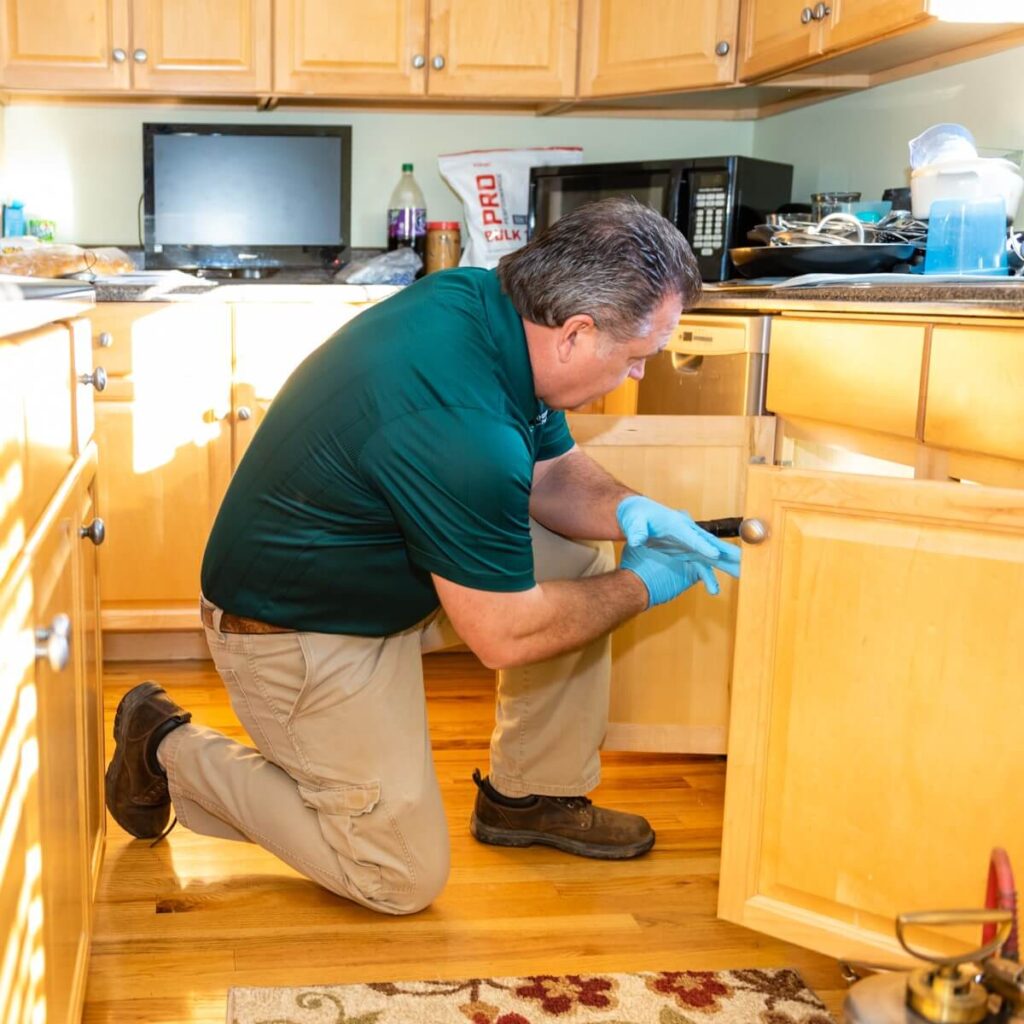
Fall can bring subtle changes in pest activity around Greenville homes. Cooler nights may push rodents toward garages, crawl spaces, attics, and wall voids, while cockroaches, ants, spiders, and bed bugs can remain active indoors where warmth, food, moisture, and shelter are available. Termites, fleas, ticks, mosquitoes, stinging insects, and birds may also continue creating concerns depending on weather and property conditions.
Our team recommends paying attention to patterns rather than waiting for a large infestation to become obvious. A professional pest inspection helps us connect visible evidence with entry points, moisture, food sources, nesting areas, and seasonal movement. Fall is a useful time to review those conditions because small problems that developed during summer may become easier to notice as pests begin shifting toward more protected spaces.

Repeated Sightings And Physical Evidence Deserve Attention
Seeing one insect does not always mean there is a serious infestation, but repeated sightings in the same area should not be ignored. Droppings, gnaw marks, webbing, insect debris, shed skins, egg cases, mud tubes, or nesting material can all indicate that pests are established nearby rather than simply passing through.
Our discussion of small pest problems explains why early activity can expand when food, moisture, shelter, and suitable breeding conditions remain available. During an inspection, our technicians compare fresh evidence with older signs to determine whether activity is current and how far it may have spread.
Warning signs worth documenting include:
- Finding rodent droppings or gnaw marks in garages, attics, or storage spaces
- Seeing cockroaches around appliances, plumbing, or damp utility areas
- Noticing recurring ant trails near kitchens, windows, or foundation edges
- Finding spider webs or egg sacs in low-traffic corners
- Spotting termite mud tubes, discarded wings, or damaged wood
- Hearing scratching, movement, or nesting sounds after dark
These signs give our team a starting point for determining where the problem originates and which areas require closer evaluation.
Moisture, Entry Points, And Shelter Can Reveal Hidden Risk
A pest inspection is not limited to looking for live pests. Many infestations are supported by conditions that are easy to overlook during day-to-day routines. Leaks, condensation, clogged drainage, worn door seals, foundation cracks, utility gaps, dense vegetation, and clutter can all make parts of a home more attractive or accessible.
Greenville’s steady humidity can keep kitchens, bathrooms, basements, garages, crawl spaces, and utility areas appealing to cockroaches, ants, spiders, termites, and rodents. Exterior conditions can also support mosquitoes, fleas, ticks, stinging insects, and birds when water, shelter, or host activity remains available.
Our team may look for:
- Moisture around plumbing, drains, crawl spaces, and foundation edges
- Gaps around doors, windows, vents, rooflines, and utility penetrations
- Clutter that creates undisturbed hiding or nesting areas
- Standing water that can support mosquito activity
- Vegetation touching the structure or blocking inspection access
- Food, pet supplies, or waste that may attract insects or rodents
The value of professional evaluation is that these conditions can be interpreted alongside pest evidence. A damp area alone may not indicate an infestation, but moisture combined with droppings, insect activity, or structural damage can change the picture significantly.
Seasonal Changes Can Expose Problems That Started Earlier
Fall pest pressure in Greenville is shaped by warm summers, humidity, rainfall, and relatively mild winters. Our guide to seasonal pest trends explains how rodents may move toward indoor shelter as temperatures fall, while cockroaches and spiders can remain active in protected areas. Other pests may continue depending on moisture, food, host activity, and property conditions.
This seasonal transition can reveal problems that were less noticeable during summer. Rodents may begin using garage or attic openings more frequently. Cockroaches can become easier to spot indoors. Spider activity may increase where prey insects are present. Termite evidence may appear even when feeding remains hidden inside wood.
A fall pest inspection may include:
- Comparing current activity with earlier summer problem areas
- Checking garages, crawl spaces, attics, and storage rooms for new evidence
- Reviewing structural gaps that may allow cooler-weather entry
- Inspecting moisture-prone areas for insects and conducive conditions
- Evaluating termite clues or wood damage that needs further attention
- Planning follow-up when activity changes rather than fully disappears
Our technicians use these findings to decide whether treatment, exclusion, moisture correction, monitoring, or another response is appropriate. This helps avoid one-time reactions that address only the pest currently visible while leaving the underlying cause unchanged.
A quiet week does not always mean a pest problem has resolved. Activity can shift into walls, crawl spaces, attics, or other protected areas as weather changes. Regular inspection is especially useful when the home has a history of recurring rodents, cockroaches, ants, spiders, termites, bed bugs, or other pests handled by our team.
Catch Fall Pest Problems Before They Settle In
If you are seeing recurring pest activity, droppings, webs, moisture-related signs, or suspicious structural damage, contact Greenville Pest Control for a professional pest inspection, targeted treatment, and long-term prevention based on your home’s current conditions.
