

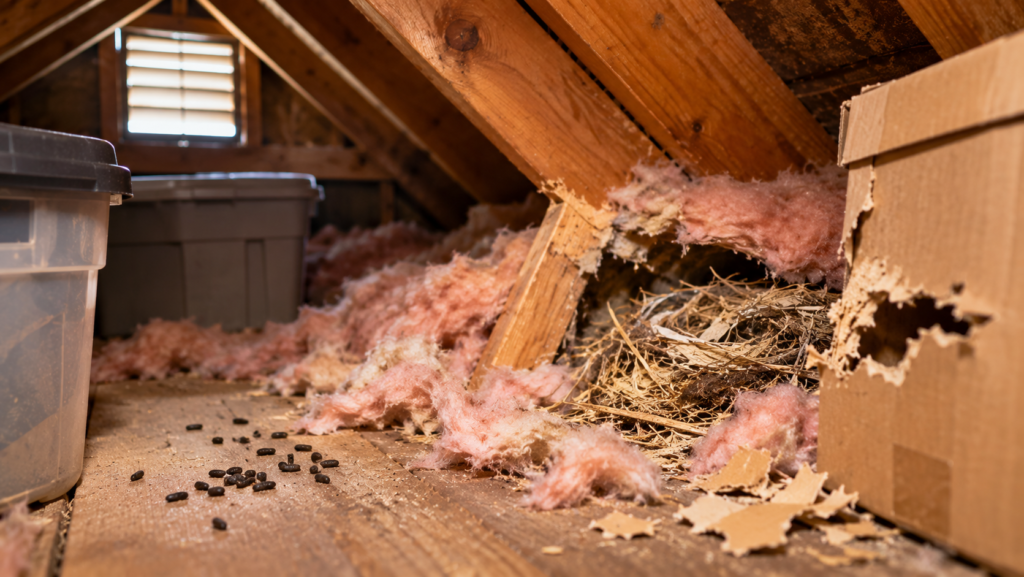
A scratching sound starts above the bedroom after the house gets quiet. At first, it seems like a branch brushing the roof. Then someone notices a few pellets near the attic hatch and shredded insulation beside a storage box. These clues may indicate rats or mice, but hearing movement does not tell us which animal is responsible or whether a nest is established.
Greenville attics offer protection from rain, temperature swings, and household activity. We investigate physical evidence, possible access routes, and the condition of the space before recommending rodent control. Finding where animals travel is important, but establishing whether they are nesting helps us plan an appropriate response.
Recognize the Evidence Rodents Leave Near Nesting Areas
Mice and rats often stay concealed while people are active. They may travel along framing or behind stored belongings, leaving evidence in corners that homeowners rarely inspect. Several consistent signs are more informative than an isolated noise, particularly when the evidence appears fresh.
Our attic inspections may look for:
- Droppings: Pellets near joists or storage areas can indicate rodent movement, though size and shape require careful identification.
- Shredded insulation: Disturbed fibers mixed with paper or fabric may signal nest construction in a protected spot.
- Gnaw marks: Chewed wood, stored boxes, or cable coverings can indicate rodent activity and possible damage.
- Travel marks: Dusty tracks or dark rub marks along framing may suggest repeated routes through the attic.
- Unusual odors: A persistent musky smell may accompany heavier activity, although moisture or other causes are possible.
Old droppings and abandoned nesting material do not prove rodents are still present. We compare locations, condition, and recent observations to distinguish current activity from evidence left after an earlier problem. Keep a record of where you notice changes, but avoid handling suspected nests or dry waste.
Our article on rodent property damage explains how rodents disturb insulation and may damage wiring while using hidden spaces. That makes attic evidence worth investigating even when the living rooms look undisturbed.
Follow Possible Entry Routes Around the Roofline
An attic nest does not appear without a way in. Roof rats are skilled climbers, while mice can use remarkably small openings around construction joints. In Greenville neighborhoods with mature trees and interconnected roof features, animals may approach above ground level without crossing an obvious doorway.
We review vulnerable areas such as:
- Soffit edges: Loose panels and deteriorated joints may provide openings into protected roof spaces.
- Vent screens: Torn or displaced screening can expose gaps while still appearing intact from a distance.
- Roof intersections: Transitions around flashing or adjoining structures can conceal difficult-to-see access points.
- Utility openings: Unsealed cable or pipe penetrations may connect exterior surfaces with wall or attic cavities.
- Nearby vegetation: Branches, vines, and trellises can provide approaches, though proximity alone does not establish entry.
Do not climb onto a steep roof or block vents to stop an animal. Attic ventilation must remain functional, and work near electrical lines or damaged roof materials requires qualified trades. Also avoid sealing a suspected active opening before determining whether rodents remain inside. Trapping them within a cavity can create additional problems.
Our guide to early rodent warning signs discusses scratching, nesting materials, droppings, and smudge marks. Connecting those clues with an actual exterior opening helps separate a plausible access route from an ordinary construction gap.
Address the Animals Before Repairing Their Damage
Finding a nest is only the beginning. A mouse or rat may have damaged insulation, contaminated nearby materials, or gnawed wiring. Cleaning an attic without removing active rodents can lead to repeated damage, while setting a trap without considering entry points may leave the underlying vulnerability unchanged.
A professional response may include:
- Species assessment: Identify evidence consistent with mice or rats before selecting a control method.
- Targeted removal: Use suitable trapping or other approved measures based on activity and property conditions.
- Exclusion planning: Recommend durable repairs to confirmed access points after occupancy is addressed.
- Damage review: Document affected insulation, stored materials, and suspected electrical hazards for appropriate follow-up.
- Monitoring: Compare fresh evidence with earlier findings to determine whether activity is declining.
Our rodent services combine inspections, control, and prevention recommendations for Greenville homes. We explain which findings support treatment and when repair or cleanup work should involve another qualified professional. If wires appear chewed, arrange an electrician’s assessment rather than touching them. For rodent waste, follow public-health guidance; never sweep or vacuum dry droppings, which can release contaminated particles.
Greenville’s relatively mild winters do not guarantee attic rodents will leave when spring arrives. A protected space can remain useful while outdoor conditions change. Focus on identifying current activity, addressing likely routes, and confirming results rather than assuming the noises will stop on their own.
Find Out What’s Moving Above the Ceiling
If scratching, droppings, or damaged insulation suggest rodents are nesting overhead, contact Greenville Pest Control for a professional inspection. We can investigate accessible attic evidence, explain rodent-control options, and recommend exclusion and follow-up for your Greenville home.
