

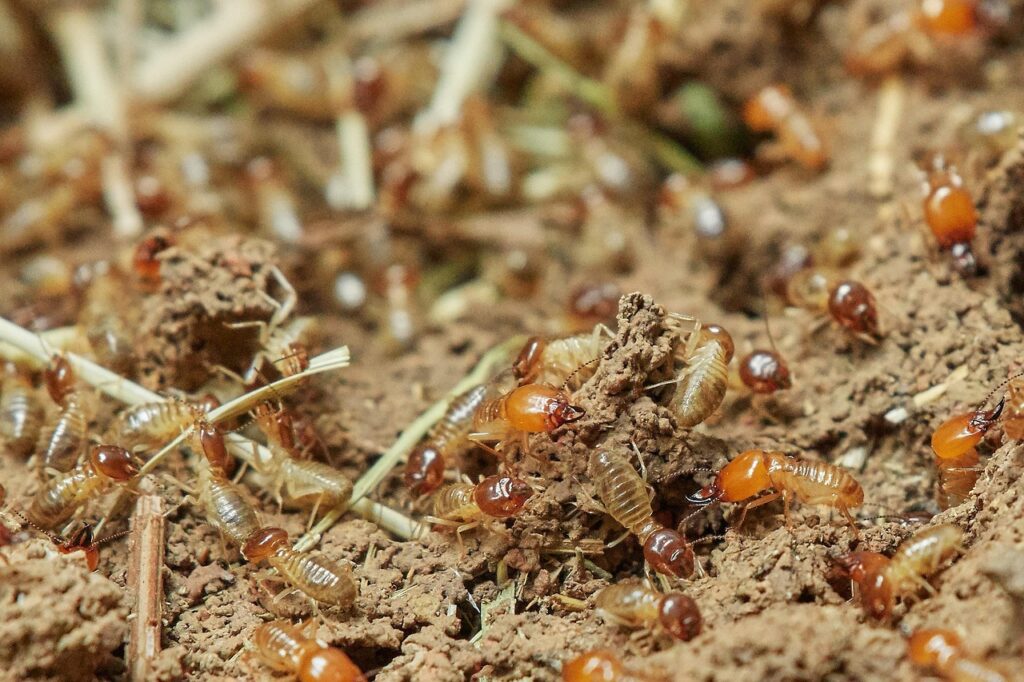
The floorboard near a doorway looks slightly uneven. A patch of paint has bubbled along the wall, and a thin, dirt-colored line appears beside the foundation. None of those details seem dramatic on their own. Together, however, they may justify checking for subterranean termites before concealed feeding causes further damage.
Across Greenville and Upstate South Carolina, moisture and ground contact can give these insects opportunities to reach structural wood. Our technicians investigate suspected evidence rather than assuming every damaged board has termites. Early detection begins with recognizing where termites travel, what they leave behind, and why a professional inspection matters.
Follow the Mud Tubes and Other Early Clues
Subterranean termites typically nest in soil and travel through protected pathways to reach wood. Their mud tubes help maintain the humidity they need while moving across exposed surfaces. Unlike an obvious surface-chewing pest, termites may feed inside a board while its exterior still looks relatively normal.
Warning signs worth documenting include:
- Mud tubes: Pencil-width or wider earthen passages may appear along foundations, piers, or crawl-space supports.
- Discarded wings: Piles of similarly sized wings near windows or doors can follow termite swarming activity.
- Altered wood: Trim that sounds hollow or dents unusually easily may have internal damage.
- Surface distortion: Bubbling paint, sagging areas, or uneven flooring can signal a problem requiring investigation.
- Concealed pathways: Wood touching soil, foundation joints, and plumbing penetrations may provide protected access.
These clues are not conclusive by themselves. Moisture damage, wood decay, and other insects can create similar appearances. We compare the physical signs with accessible wood, surrounding soil, and possible termite routes before recommending a treatment.
Our article on hidden termite damage explains why colonies can remain active long before homeowners encounter insects. Paying attention to subtle patterns is more useful than waiting for an obvious structural failure.
Understand How Moisture Makes Damage Harder to Spot
A damp crawl space does not automatically mean termites are present, but the moisture can support conditions that favor subterranean activity. Greenville’s rainfall, humid weather, drainage problems, and plumbing leaks may create vulnerable areas where wood stays damp, and inspection access is limited.
During a termite assessment, we consider:
- Crawl-space humidity: Persistent dampness can affect joists, sill plates, and other concealed wood.
- Leaking pipes: Water near plumbing connections may make neighboring structural materials more attractive.
- Poor drainage: Overflowing gutters or grading issues can leave soil wet beside the foundation.
- Wood-to-ground contact: Deck supports, siding, or stored lumber may provide direct routes toward a building.
- Concealed deterioration: Water staining or softened trim requires identification rather than an automatic termite diagnosis.
The distinction between insect damage and moisture deterioration matters. Termite control will not repair a leak, restore compromised framing, or resolve a drainage defect. A plumber, contractor, or structural specialist may be needed to evaluate those separate problems.
Our guide to termite swarm warnings explains how winged insects and discarded wings can add important context to a moisture-related finding. A swarm near the home signals that further investigation is worthwhile, but does not by itself show the exact colony location or degree of damage.
Let Inspection Findings Determine the Next Step
If you discover suspicious wood or a mud tube, avoid assuming that scraping away the visible material solves anything. Worker termites may continue traveling within the soil and surrounding structure. A professional assessment looks for connected evidence and determines whether the signs indicate an active infestation.
Our termite inspection process may include:
- Species confirmation: Distinguishing termites from ants and other wood-associated insects prevents ineffective treatment.
- Activity mapping: We inspect accessible foundations, crawl spaces, and wood connections for related evidence.
- Risk evaluation: Moisture, construction details, and soil contact help identify areas needing attention.
- Treatment planning: Liquid soil treatment or baiting may be recommended according to property conditions.
- Follow-up review: Later checks help evaluate activity and whether corrective recommendations were completed.
For subterranean termites, our treatment options include a liquid application around appropriate foundation areas and an in-ground baiting system. We explain which approach suits the site and what access or preparation it requires. Neither option reverses existing wood damage, and homeowners should understand any monitoring or warranty terms before proceeding.
Finding termite evidence early does not mean every problem will be minor. Some concealed damage may require additional investigation, and inaccessible cavities can limit what an inspection establishes. Still, identifying credible warning signs and obtaining a focused assessment can prevent months of uncertainty while active termites continue feeding.
We also encourage owners to record the location of new wings, tubes, or wood changes. Photographs and dates provide useful comparisons if an inspector returns later. The goal is to act on evidence promptly without confusing every stain or creak with termites.
Find the Source Before Damage Grows
If you’ve found mud tubes, discarded wings, or suspicious wood, contact Greenville Pest Control for a termite inspection. Our team can review accessible evidence, discuss treatment options, and explain when further repair evaluation may be necessary.
