

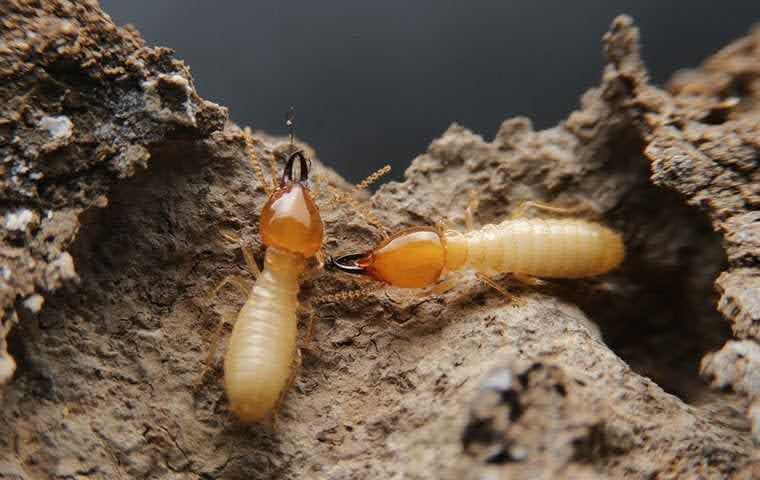
Termites can feed inside a home for months before obvious damage appears. Subterranean termites live in underground colonies and travel through protected routes into wood, while most of their activity remains concealed behind walls, beneath floors, around crawl spaces, or near foundations. A surface may still look intact even when galleries have developed underneath it.
That hidden behavior is why termite control depends on careful inspection rather than visible insects alone. Early evidence can be subtle, scattered, or mistaken for moisture damage, ordinary wear, or another household issue. Recognizing patterns gives homeowners a better chance to respond before structural materials become more difficult and costly to repair.
Termites Feed Where People Rarely Look
Subterranean termites avoid open, dry conditions. They remain inside soil, mud tubes, and wooden materials where moisture and shelter protect them while they move between the colony and a food source.
Early activity may be found around:
- Foundation edges, crawl-space supports, and plumbing penetrations.
- Sill plates, floor joists, subfloors, and wall framing.
- Garages, porches, decks, and areas with wood-to-soil contact.
- Damp trim, baseboards, or flooring near moisture-prone locations.
- Cracks, joints, and utility openings that provide concealed access.
Because these locations are not examined during ordinary household routines, termites can continue feeding without creating an immediate surface change. A professional inspection follows the evidence into less-visible parts of the structure.
Surface Changes Can Resemble Other Problems
Termite damage does not always announce itself with a dramatic collapse or a large group of insects. Early changes may look like humidity, aging paint, a plumbing leak, or normal settling.
This is one reason repeat treatment problems occur when the response focuses on a visible symptom instead of the hidden source. Treating one damaged spot cannot confirm whether termites are still traveling from soil, feeding elsewhere, or using another concealed route.
Wood may sound hollow when tapped, paint can bubble, trim may become easier to dent, and floors may feel slightly uneven. Each sign needs context because moisture damage, decay, and construction issues can produce similar symptoms. Accurate identification prevents assumptions from guiding the treatment plan.
Swarmers May Be the First Obvious Warning
Winged termites, known as swarmers, leave established colonies to reproduce. Homeowners may find them near windows, doors, garages, patios, or light sources, sometimes after warm and humid conditions.
Warning signs linked to swarming include:
- Discarded wings gathered along windowsills or floor edges.
- Winged insects emerging indoors or close to the foundation.
- Repeated activity near the same wall, doorway, or structural joint.
- Mud tubes or damaged wood found near the swarm location.
- Seasonal appearances that return without a clear explanation.
Swarmers do not reveal the exact size or location of a colony, but indoor activity can suggest that termites are established within or very close to the structure. A termite control inspection can distinguish termite swarmers from flying ants and check nearby wood and soil access points.
Summer Swarms Can Point to Established Activity
Warm-season swarming often attracts attention because the insects appear suddenly, yet the colony producing them may have been developing for years. The swarm is a reproductive event, not necessarily the beginning of the infestation.
A closer look at summer termite swarms explains why discarded wings, indoor swarmers, mud tubes, moisture, and wood changes should be considered together. One clue may be inconclusive, but several related signs can indicate a hidden problem that deserves professional evaluation.
Inspection timing matters because swarm evidence can disappear quickly. Wings may be swept away, insects may leave, and the home can look quiet again while worker termites remain protected inside soil and wood. Documenting where activity occurred helps guide a more focused inspection.
Professional Inspection Defines the Extent of Damage
The main challenge with termites is not only finding them. It is determining whether evidence is active, how termites are entering, which materials are affected, and what conditions continue to support the infestation.
A thorough assessment may include:
- Examining foundations, crawl spaces, garages, attics, and structural wood.
- Checking mud tubes, moisture zones, discarded wings, and damaged materials.
- Distinguishing current activity from older evidence or unrelated deterioration.
- Identifying access routes connected to soil, plumbing, or structural gaps.
- Recommending targeted treatment, monitoring, and repair evaluation when needed.
Professional termite control connects inspection findings with a property-specific response. Treatment may address active routes and colony access, while moisture correction, wood-contact reduction, and follow-up monitoring help reduce continued risk.
Waiting for severe damage can make the infestation harder to define because several structural areas may already be involved. Early evaluation provides a clearer picture before cosmetic changes become major repair concerns. It also helps homeowners avoid replacing visible wood while hidden activity remains elsewhere.
Bring Hidden Termite Activity Into the Open
Hollow wood, discarded wings, mud tubes, or unexplained surface changes deserve careful attention. Contact Greenville Pest Control for professional termite control based on detailed inspection, targeted treatment, and long-term protection.
