

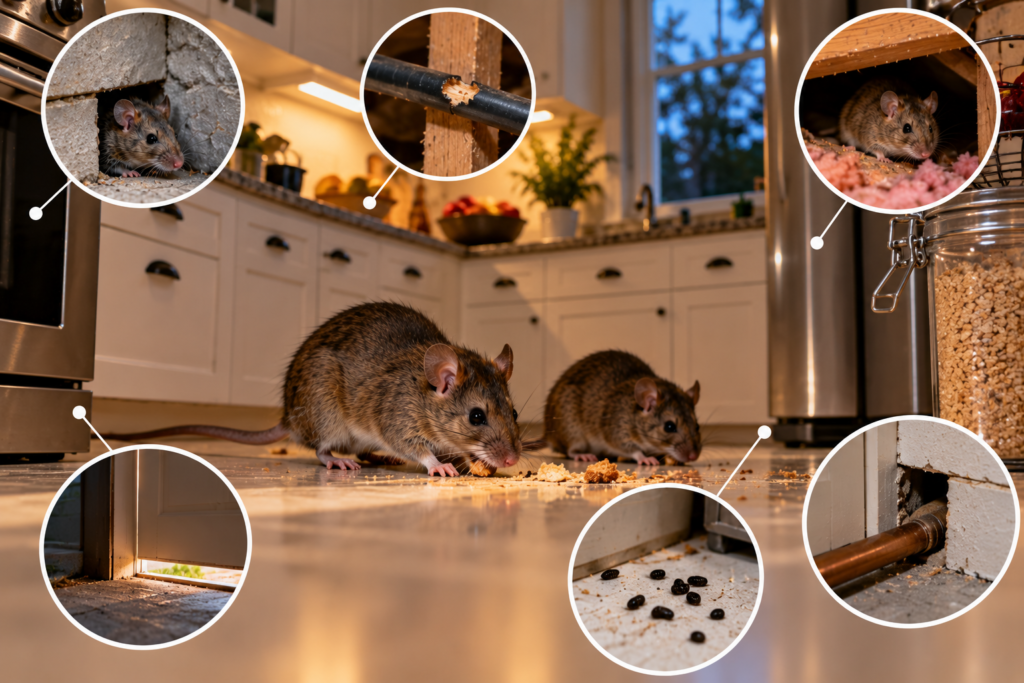
Cooler temperatures can make kitchens especially attractive to mice and rats because these spaces combine warmth, food, water, and hiding places in one protected part of the home. Rodents may enter through gaps around doors, utility lines, crawl-space connections, rooflines, or foundations, then follow walls and concealed routes toward areas where food is consistently available.
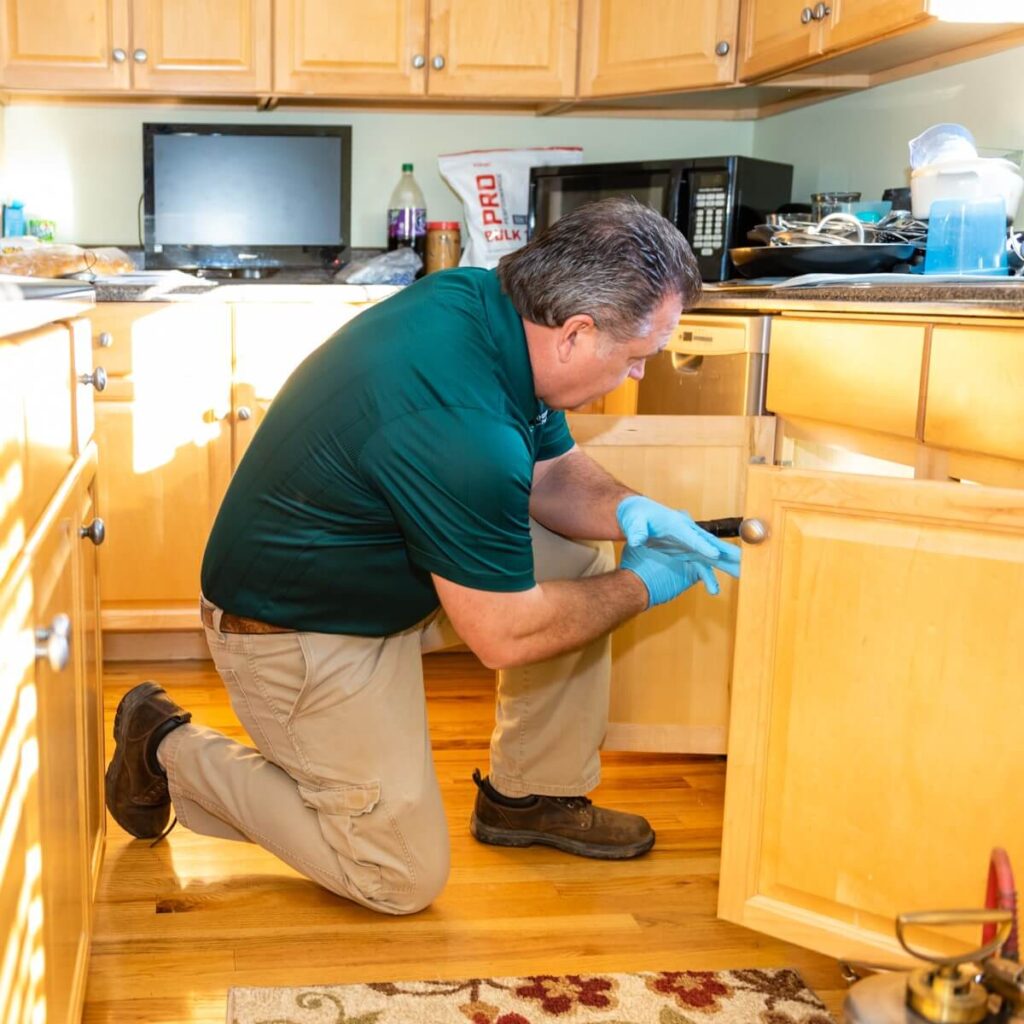
Our team approaches rodent control by looking beyond the first droppings or scratching sounds. A kitchen sighting often connects to a larger pattern involving entry points, storage areas, nearby wall voids, or exterior shelter. Professional inspection helps identify where rodents are coming from, what is keeping them active, and whether they have already spread beyond the room where evidence first appeared.
Food And Water Make Kitchens Reliable Rodent Targets
Rodents are opportunistic feeders, and kitchens provide several dependable food sources. Pantry goods, pet food, crumbs beneath appliances, open trash, and poorly sealed packages can all support activity. Water can be just as important, especially around sinks, dishwashers, refrigerators, plumbing lines, and small leaks that are easy to overlook.
Our article on small pest problems explains why minor signs can become more serious when food, moisture, shelter, and hidden access remain available.
Conditions that can attract rodents include:
- Open food packages stored in low cabinets or pantries
- Pet food left accessible overnight
- Crumbs and grease beneath stoves or refrigerators
- Trash containers that do not close securely
- Slow leaks beneath sinks or around appliance connections
- Water bowls, condensation, or damp areas near plumbing
Removing easy resources can reduce attraction, but it does not confirm that rodents already inside have left or that entry routes are closed.
Hidden Gaps Give Rodents A Direct Route Toward Warm Indoor Spaces
As outdoor temperatures fall, mice and rats may look for sheltered areas with more stable conditions. Kitchens are often connected to utility penetrations, wall cavities, crawl spaces, basements, and exterior plumbing routes, all of which can create concealed pathways through the structure.
Our technicians inspect both the interior and exterior because the visible kitchen activity may begin several rooms away or outside the home entirely. Rodents can travel behind cabinets, inside walls, and along structural edges without appearing in open areas often.
Common access concerns include:
- Gaps around plumbing, electrical lines, and utility penetrations
- Worn weatherstripping around exterior or garage doors
- Openings around foundations, vents, or crawl-space access
- Damaged screens or loosely fitted exterior components
- Roofline gaps that lead into attics or wall systems
- Cluttered storage areas that hide rodent travel routes
Professional exclusion is most effective when active routes are identified first. Sealing openings without understanding the infestation can leave rodents trapped in the structure or cause them to search for another interior path.
Early Inspection Can Prevent A Small Kitchen Problem From Spreading
Rodents reproduce quickly and can establish nesting areas in attics, wall voids, crawl spaces, storage rooms, or behind appliances. That is why a few droppings near a pantry should not automatically be treated as an isolated kitchen problem.
Our guide to lower pest costs explains why early inspection and prevention often reduce the need for more extensive treatment after infestations spread into hidden areas.
Signs that activity may be established include:
- Droppings appearing in multiple cabinets or rooms
- Gnaw marks on food packaging, wood, wiring, or stored materials
- Scratching sounds inside walls or ceilings after dark
- Greasy rub marks along repeated travel routes
- Shredded paper, insulation, or fabric used for nesting
- New evidence returning after visible messes are cleaned
Our team compares these signs with food sources, moisture, structural openings, and exterior conditions. That helps determine whether the issue involves one access point or several active routes.
Professional rodent control can combine inspection, trapping, exclusion, sanitation guidance, and follow-up. Each step serves a different purpose. Trapping addresses rodents already inside, exclusion reduces future entry, and monitoring helps confirm whether activity is actually declining.
Greenville’s seasonal weather can also change rodent pressure without eliminating it. Cooler periods may push rodents toward indoor shelter, while warmer days can increase movement around garages, crawl spaces, and exterior structures. A quiet stretch does not always mean the problem has ended.
Kitchens deserve particular attention because they provide what rodents need while also containing food-contact surfaces and stored goods. Contamination from droppings, urine, or nesting material can extend beyond the place where a rodent is actually seen. Professional evaluation helps determine which areas require cleaning, monitoring, or treatment and keeps the response focused on confirmed evidence.
Long-term prevention depends on making the property harder to enter and less useful once rodents approach it. Secure food storage, moisture correction, structural repairs, and ongoing monitoring all support that goal. However, when fresh droppings, gnawing, noises, or repeat sightings are already present, professional inspection provides the clearest way to understand the full extent of the problem.
Keep Cooler Weather From Turning Your Kitchen Into Rodent Shelter
If rodent evidence is appearing in your kitchen as temperatures fall, contact Greenville Pest Control for professional rodent control focused on inspection, trapping, exclusion, prevention, and long-term monitoring.
